Malta’s Chief Justice Deadlock Explained

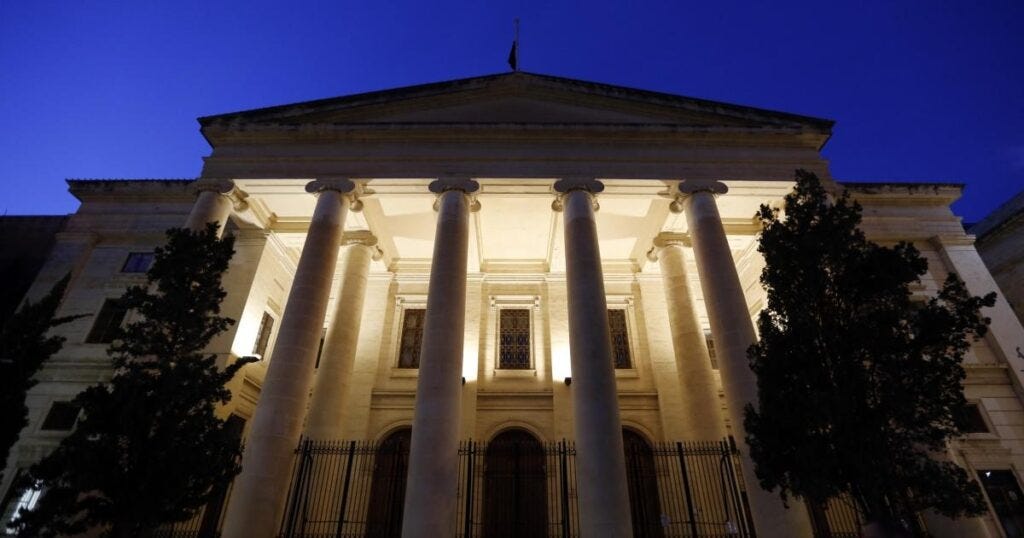
Malta is currently facing a constitutional stalemate over the appointment of the next Chief Justice. The government’s first 2 nominees, Consuelo Scerri Herrera and Miriam Hayman, thus far have failed to secure the required two-thirds majority in Parliament after the Opposition withheld its support, leaving the country without agreement on one of its most senior judicial posts.
So how did we get here…and what exactly is being proposed?
The Context
Before 2020, the appointment of Malta’s Chief Justice was effectively controlled by the Prime Minister. While there was consultation with the Leader of the Opposition, the Prime Minister ultimately recommended the appointment to the President. In practical terms, this meant a simple parliamentary majority (50% plus one) was sufficient to secure the post.
However in 2018, the Venice Commission of the Council of the European Union issued recommendations calling for constitutional reforms in Malta. Among them was a proposal that appointments to senior constitutional roles, including the Chief Justice, Ombudsman, and Attorney General, should require broader parliamentary consensus, specifically a two-thirds majority. The goal was to limit unilateral executive control and strengthen institutional independence.
These recommendations were later reflected in constitutional amendments adopted in 2020. The two-thirds requirement for appointing the Chief Justice became an entrenched constitutional provision - meaning it cannot be amended without another two-thirds majority in Parliament.
The “Anti-Deadlock Mechanism”
In light of the current impasse, the government is tabling an “anti-deadlock mechanism.” We don’t have the full details yet, however Prime Minister Robert Abela has pointed to the mechanism for the Standards Commissioner for Public Life as ideal.
Applying this would change the amount of parliamentary votes required from 2/3rds to a simple majority, or 50+1%.
That would represent a major constitutional shift.
Under such a system, the government of the day would once again be able to appoint the Chief Justice without requiring cross-party support. This high centralization of power risks undermining the very safeguards introduced to protect judicial independence.
It also sets a significant precedent: if constitutional safeguards can be lowered when they become politically inconvenient, what stops future governments from doing the same in other areas?
So, What’s The Alternative?
One possible alternative is allowing the judiciary itself to determine who becomes Chief Justice. In fact this was encouraged by the Venice Commission itself. Such a system could remove political influence from the process entirely, greatly reinforcing institutional independence.
However, that model raises its own concerns. Judges appointing their own head could create a more closed system with little democratic accountability. For that reason, some argue Parliament should retain a role in oversight, in case of underperformance.
What Happens Next?
Leader of the Opposition Alex Borg said that he won’t agree on a simple majority. Therefore, as things stand, meaning the discussion on breaking the deadlock has reached a deadlock of its own.
Where this goes next remains uncertain.
But ultimately, this debate is not simply about filling a vacancy. It raises a deeper constitutional question: how should judicial independence be protected, and how much power should any government have over the courts?
That is the real issue at stake.